An implant-supported bridge replaces several missing teeth with a fixed restoration supported by implants instead of neighboring natural teeth. For the right candidate, it can restore chewing, improve appearance, and feel more stable than a removable partial denture, but it also involves surgery, healing time, and long-term maintenance.
If you are weighing options to replace several missing teeth with a stable, fixed restoration, dental implant surgery may be the key step that enables an implant-supported bridge. Tabor Dental Associates in Hendersonville, TN guides patients through surgical planning, comfort measures, and realistic timelines so you understand what to expect.
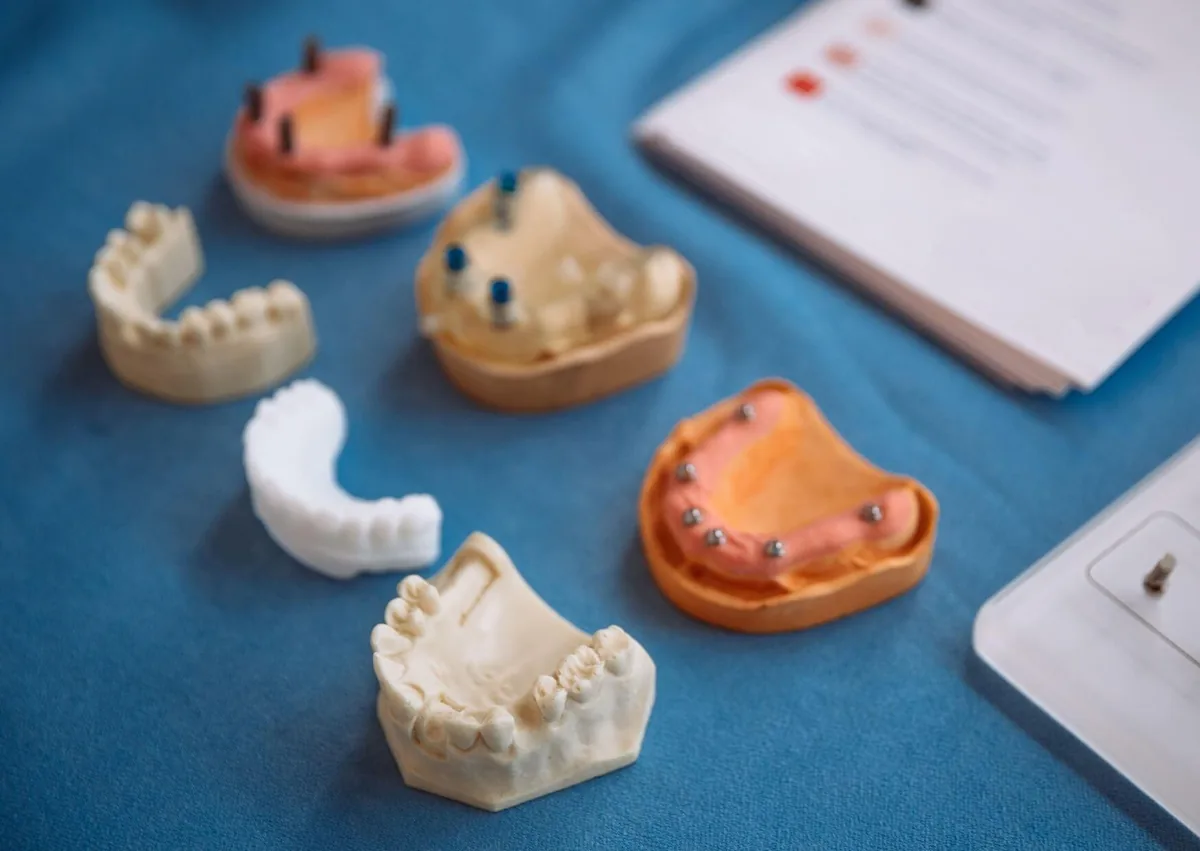
An implant-supported bridge uses dental implants placed in the jawbone to support a connected set of replacement teeth. Unlike a traditional bridge, it does not depend on neighboring natural teeth for support.
You do not always need one implant for every missing tooth. The number depends on the location of the gap, bone quality, bite forces, and the planned bridge length.
Replacing missing teeth can help restore chewing surfaces and reduce unwanted tooth movement. Implants also stimulate the surrounding bone, although they cannot guarantee that all bone volume will be preserved over time.
Teeth may be lost because of decay, gum disease, injury, failed root canal treatment, or developmental conditions. The empty space can affect chewing and speech, and nearby teeth may drift while opposing teeth may move into the gap.
Bone in an empty area often shrinks because it no longer receives normal stimulation from a tooth root. That bone loss can affect implant placement and may make bone grafting necessary before or during treatment; learn more about when a bone graft for implants may be recommended.
Persistent pain, swelling, drainage, a bad taste, fever, or a loose tooth should be evaluated promptly. Facial swelling that affects breathing or swallowing needs urgent medical care.
The best option depends on how many teeth are missing, the condition of adjacent teeth, available bone, oral health, cost, and personal preference. A clinical exam and imaging are needed to compare these choices safely; for broader context, see dental implants pros and cons.
|
Option |
Support |
Main Advantage |
Important Limitation |
|---|---|---|---|
|
Implant-supported bridge |
Dental implants |
Fixed and does not rely on neighboring teeth |
Requires surgery, healing, and adequate bone |
|
Traditional dental bridge |
Natural teeth beside the space |
Often completed faster without implant surgery |
Supporting teeth usually must be reshaped |
|
Removable partial denture |
Gums and remaining teeth |
Removable and generally less invasive |
May move during function and require adjustment |
|
Individual implants and crowns |
One implant for each replaced tooth in many cases |
Each tooth is restored separately |
May require more implants, space, and expense |
A conventional dental bridge may make sense when adjacent teeth already need crowns. A removable partial denture may be a better fit for someone who wants to avoid surgery or is not currently a candidate for implants.
Candidates generally need healthy enough gums, adequate jawbone, enough space for the restoration, and the ability to keep the area clean every day. Overall health, medications, previous radiation therapy, smoking or vaping, uncontrolled diabetes, active gum disease, and heavy grinding can affect healing and long-term risk.
Limited bone does not always rule out treatment. Bone grafting may create enough support, but it can add cost, complexity, and several months of healing.
Age alone is not usually the deciding factor for adults. Implant placement is typically delayed until jaw growth is complete in younger patients, while older adults may still qualify if their health and oral conditions support surgery and healing.
A dentist may use an exam, dental X-rays, and cone-beam CT imaging to evaluate nerves, sinuses, bone dimensions, and implant positions. Planning also starts with the final bite and tooth shape, not just the surgery itself.
Treatment often begins by addressing infection, active gum disease, or teeth that cannot be saved. Digital scans or impressions may also be taken to help design the bridge and guide implant positioning.
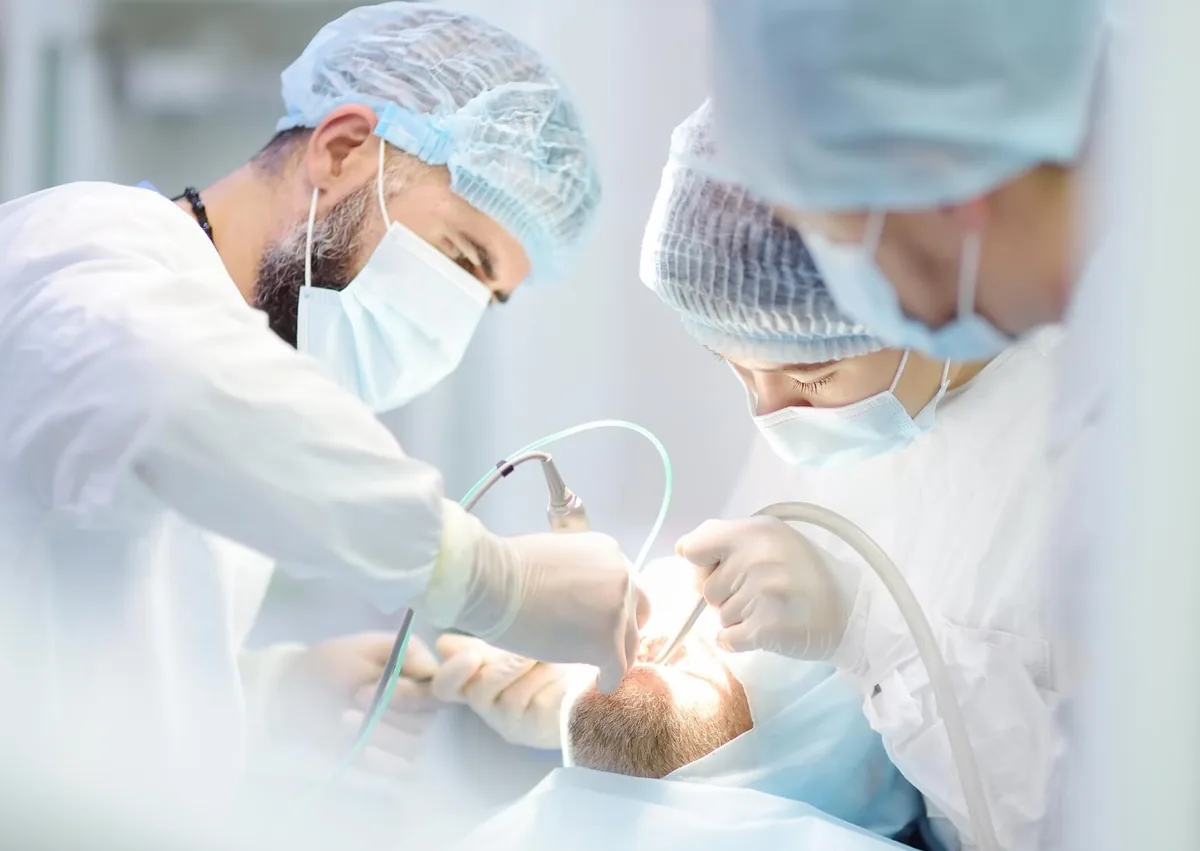
During dental implant surgery, the clinician places titanium or ceramic implant fixtures into the jaw. Some patients can receive a temporary restoration, but immediate fixed teeth are not right for every case because the implants need enough initial stability and protection from damaging bite forces.
After placement, the bone heals closely around the implant surface in a process called osseointegration. This healing phase often takes several months.
Grafting, extraction healing, medical factors, and implant location can all lengthen treatment. The final bridge is usually placed only after the implants have healed well enough to support it.
|
Stage |
What Commonly Happens |
General Timing Consideration |
|---|---|---|
|
Evaluation and planning |
Examination, imaging, and treatment design |
One or more visits |
|
Preparation |
Disease treatment, extraction, or grafting if needed |
May require additional healing |
|
Implant placement |
Implants are positioned in the jaw |
Surgical visit |
|
Integration |
Bone heals around the implants |
Often several months |
|
Final bridge |
Fit, bite, appearance, and cleaning access are checked |
After adequate healing |
Temporary swelling, bruising, tenderness, or minor bleeding may occur after surgery. These symptoms should generally improve, not worsen.
Follow your clinician’s instructions on food texture, cleaning, activity, and medications. For practical recovery ideas, see our guide to soft foods after implant surgery.
Contact the dental office promptly for worsening pain or swelling, persistent bleeding, pus, fever, numbness that does not improve as expected, an unstable temporary tooth, or a feeling that the implant or bridge is moving. Trouble breathing or swallowing requires emergency care.
Even if the area feels normal, healing may still be underway. Chewing hard foods too soon or skipping follow-up visits can interfere with treatment before the final bridge is placed.
An implant cannot get a cavity, but the surrounding tissues and bone can still become inflamed or infected. Peri-implantitis involves inflammation and progressive bone loss around an implant and can threaten long-term support if not treated.
Brush twice a day and clean under the bridge every day with the tools recommended for its design, such as floss threaders, interdental brushes, or a water flosser. Cleaning beneath the bridge is essential because plaque and food can collect where regular brushing does not reach.
Professional maintenance visits help the dental team check the gums, bite, bridge components, and bone levels when needed. A nightguard may be recommended for grinding or clenching, but it does not replace treatment for a damaged restoration or unstable bite.
Potential benefits include a fixed feel, improved chewing, no need to remove the bridge for daily wear, and less dependence on adjacent natural teeth. A well-planned restoration can also support a natural-looking smile and clearer speech.
Implants and bridges are not lifetime guarantees. Gum inflammation, bone loss, implant failure, ceramic chipping, screw loosening, wear, or bite changes can require repair or replacement; for more detail, see how long dental implants last.
Costs vary based on the number of implants, bridge materials, imaging, sedation, grafting, temporary teeth, and insurance coverage. A written treatment plan should explain what is included, alternatives, expected stages, and likely maintenance needs; for common pricing factors, review the cost of dental implants.
Consider an evaluation if several teeth are missing, a removable partial denture feels unstable, or failing teeth may need to be removed. Earlier planning may preserve more options before additional bone loss occurs, although only an exam can confirm whether an implant-supported bridge is appropriate.
Bring an updated medication list and relevant medical history, including osteoporosis treatment, diabetes, bleeding conditions, immune disorders, tobacco use, and prior head or neck radiation. A good consultation should leave you with a clear understanding of alternatives, healing, risks, maintenance, and the planned sequence of care.
To confirm whether implants are appropriate for your smile and reduce future bone loss, arrange a focused implant evaluation that includes imaging and a clear treatment plan. Tabor Dental Associates provides dental implant surgery in Hendersonville, TN; call (615) 822-3200 to schedule your consultation or ask about same-day availability.
The number depends on how many teeth are missing, where they are located, bone quality, implant size, bridge span, and bite forces. A dentist has to plan the full restoration before deciding how many implants can support it safely.
Most implant-supported bridges are fixed and can be removed only by a dental professional. Some full-arch designs are removable by the patient, so ask which type is being proposed and how it should be cleaned.
Local anesthesia is used during implant placement, and sedation may be available when appropriate. Soreness and swelling after surgery are common, but severe or worsening symptoms should be assessed promptly.
Implants and bridge components may function for many years, but longevity depends on health, hygiene, bite forces, tobacco exposure, materials, and follow-up care. The bridge may eventually need repair or replacement even if the implants remain stable; for more detail, see how long dental implants last.
In selected cases, a temporary fixed bridge may be placed soon after surgery. This depends on implant stability, bone quality, bite control, and the absence of factors that could disrupt healing, while the final restoration is usually placed later.