To clean dental implants, brush twice daily with a soft-bristled toothbrush, clean between and around the implants every day, and attend regular teeth cleaning visits. The goal is to remove plaque without scratching the restoration or irritating the surrounding gums.
Implants do not get cavities, but the gums and bone around them can still become inflamed or infected. Consistent home care and professional monitoring help protect the restoration and improve its chances of lasting for many years; learn more about how long dental implants last.
If you're managing dental implants and worried about inflammation, a professional teeth cleaning can target plaque and tartar that home care may miss. Tabor Dental Associates in Hendersonville, TN, helps protect implant restorations and gum health with careful, implant-safe maintenance.
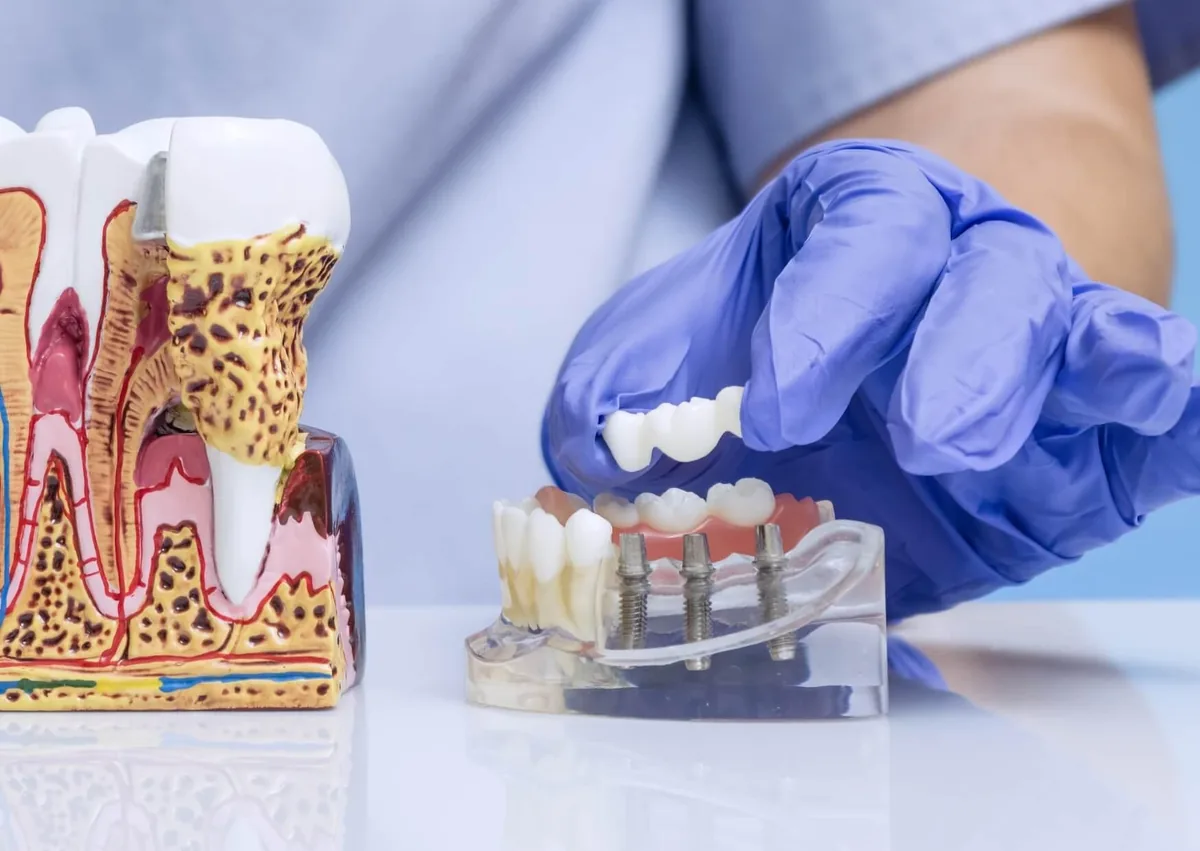
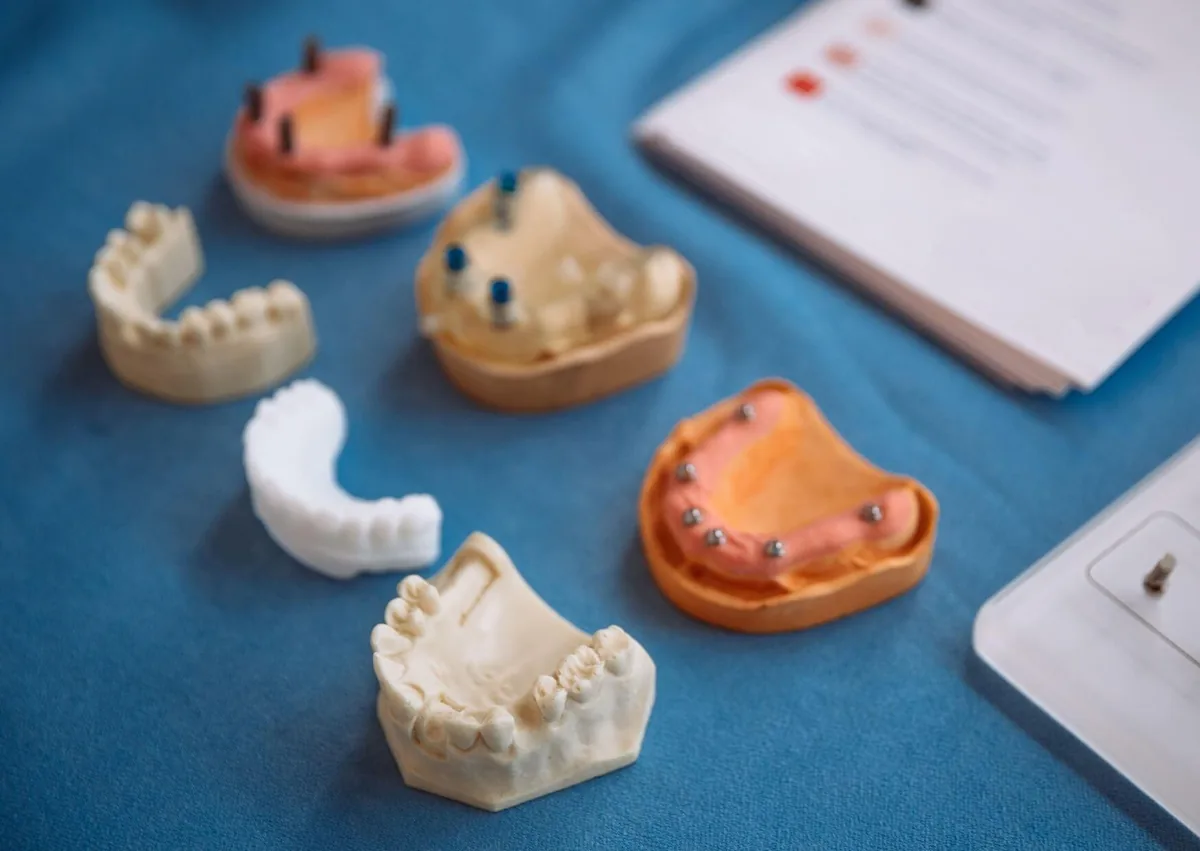
A dental implant is a post placed in the jawbone to support a crown, bridge, or denture. Plaque often collects where the restoration meets the gumline and in hard-to-reach spaces beneath implant-supported teeth.
Early inflammation around an implant is called peri-implant mucositis. It may cause redness, tenderness, or bleeding, and it can often improve when plaque is controlled and professional care is provided.
If inflammation progresses and supporting bone is lost, the condition is called peri-implantitis. Bone loss around an implant requires professional evaluation and may be difficult to reverse; treatment can include gum disease treatment to control infection and protect supporting bone. Left untreated, this process can contribute to dental implant failure.
Understanding dental implants and the dental implants pros and cons helps explain why daily cleaning and regular maintenance matter.
Use a soft manual or powered toothbrush to clean every exposed surface of the implant restoration twice a day. Angle the bristles toward the gumline, use light pressure, and spend extra time where the crown, bridge, or denture meets the gums.
Use a low-abrasive fluoride toothpaste unless your dental team recommends another product. Avoid highly abrasive pastes and aggressive scrubbing, which can scratch restorative materials or irritate the tissue.
Clean between implants and neighboring teeth at least once a day. Floss, interdental brushes, water flossers, and specialty threaders can all help, but the best tool depends on the shape of the restoration and the size of the spaces around it.
A water flosser can help remove debris around implants, especially beneath bridges or full-arch restorations. It should support careful brushing and any other cleaning method recommended by the dental team rather than automatically replace them.
The type of restoration attached to an implant determines which areas need the most attention. A dentist or dental hygienist can show you the safest technique and confirm that your cleaning tools fit properly.
|
Restoration |
Main Area to Clean |
Tools That May Help |
|---|---|---|
|
Single implant crown |
Gumline and both sides of the crown |
Soft toothbrush, floss, small interdental brush |
|
Implant-supported bridge |
Beneath the replacement teeth and around implant posts |
Floss threader, bridge floss, interdental brush, water flosser |
|
Removable implant denture |
Denture surfaces and exposed attachments |
Denture brush, soft toothbrush, attachment brush |
|
Fixed full-arch restoration |
Entire gumline and space beneath the restoration |
Angled brush, threader floss, interdental brush, water flosser |
Clean a single implant crown much like a natural tooth, with close attention to the gumline. Slide floss gently along each side instead of snapping it into the tissue.
Some floss fibers can catch on rough surfaces or exposed implant threads. If floss repeatedly shreds or catches, stop forcing it and ask the dental team to check the area and recommend another tool.
Food and plaque can build up beneath restorations that connect several implants. Threader floss, tufted floss, properly sized interdental brushes, or a water flosser may make these spaces easier to reach.
Do not force an interdental brush into a tight space. The brush should pass through with gentle resistance, and its wire should be coated or otherwise approved by the dental team for use around the restoration.
Remove the denture as directed and clean all surfaces over a towel or basin of water to reduce the chance of breakage if it is dropped. Brush the implant attachments and surrounding gums gently, and use only cleansers compatible with the denture material; follow instructions for implant-retained dentures.
Regular toothpaste can be too abrasive for some dentures. Do not soak a denture in hot water, bleach, or an unapproved household cleaner because these can damage its fit, color, or components.
After implant placement or another implant procedure, follow the treating clinician's instructions because care varies by surgery and restoration type. The area may need to be left undisturbed at first, with gentle cleaning of nearby teeth and any prescribed rinse used exactly as directed.
As healing progresses, brushing usually resumes with a very soft brush and light pressure. Do not probe the surgical site, pull on stitches, or start using a water flosser around it until the clinician says the tissue is ready.
For diet recommendations during recovery, see soft foods after surgery.
Initial gum healing often takes several weeks, while integration of the implant with the bone commonly takes several months. Smoking, uncontrolled diabetes, gum disease, poor plaque control, and certain medical factors can interfere with healing or long-term stability.
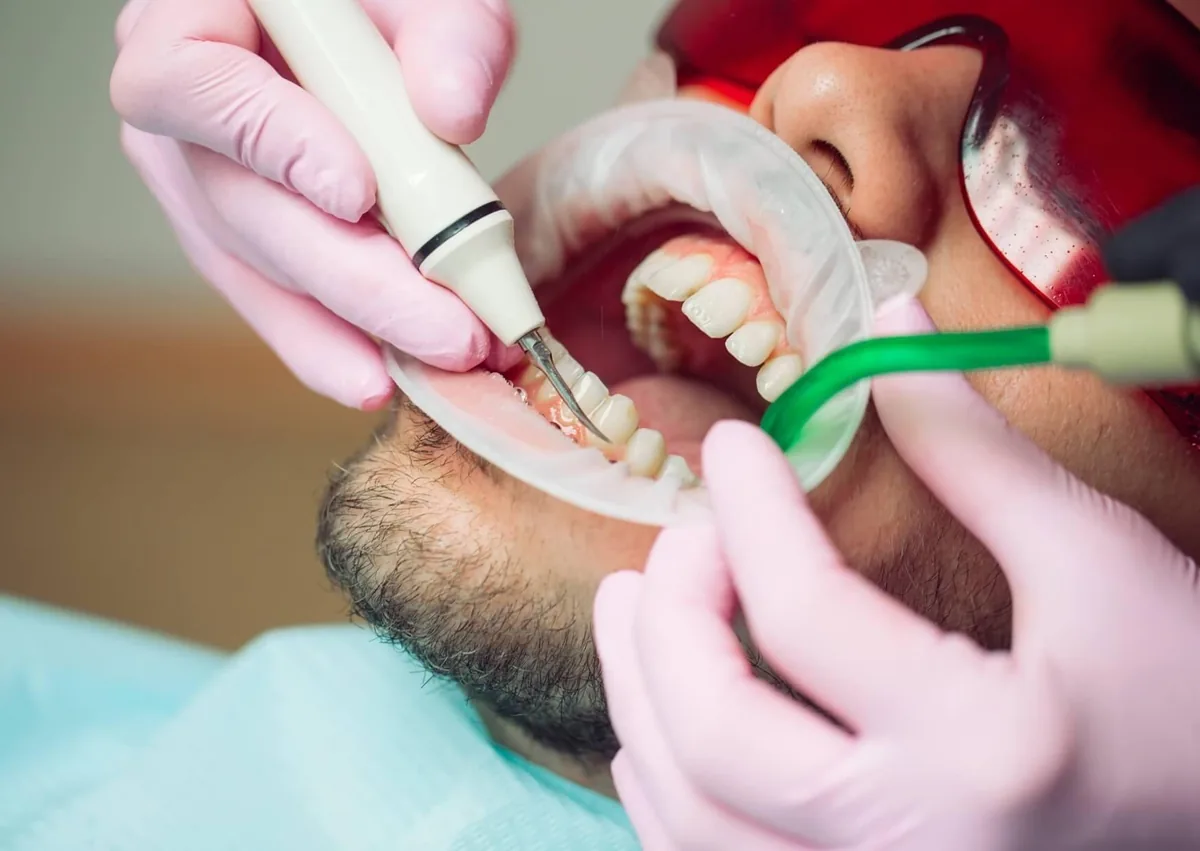
Implants need periodic professional teeth cleaning even when they look and feel normal. A dental professional can remove hardened deposits, evaluate the gum tissue, check the bite and restoration, and use implant-safe instruments that reduce the risk of scratching components.
The maintenance schedule depends on gum health, implant design, home care, smoking history, diabetes control, and prior periodontal disease. Many people are seen every three to six months, but the right interval should be individualized.
Professional exams may include measurements around the implant and periodic X-rays to monitor supporting bone. These visits can also identify a loose screw, worn attachment, chipped restoration, or hygiene problem before it becomes more complicated.
Effective cleaning can reduce inflammation, control odor, improve comfort, and help preserve the tissue supporting an implant. It also protects nearby natural teeth, which can still develop cavities and gum disease.
Home care cannot tighten a loose implant component, remove deeply hardened deposits, correct an ill-fitting restoration, or treat established bone loss. Bleeding should not be scrubbed harder, because persistent bleeding may signal inflammation that needs professional care.
Implants can be a durable option for replacing one tooth, several teeth, or a full arch, but long-term success depends in part on whether the restoration can be cleaned comfortably and consistently. That is why maintenance needs should be part of treatment planning from the start.
Arrange a dental visit if bleeding, soreness, swelling, bad taste, persistent odor, or difficulty cleaning continues for more than several days or gets worse. Also schedule an evaluation for receding gums, exposed metal, food trapping, a bite that feels different, or a crown, bridge, or denture that moves.
Seek prompt care for significant facial swelling, pus, fever, severe or rapidly increasing pain, uncontrolled bleeding, trouble swallowing or breathing, or an implant that suddenly feels loose. Trouble breathing or swallowing warrants emergency care.
A personalized maintenance visit is also appropriate when cleaning tools do not fit, floss catches, or the restoration design makes an area hard to reach. The dental team can assess the implant, review risk factors, and demonstrate a routine suited to the specific crown, bridge, or denture.
If persistent bleeding, odor, pain, or difficulty cleaning continues, arrange a professional cleaning and implant evaluation to protect supporting bone and restore comfort. Tabor Dental Associates offers teeth cleaning and implant maintenance in Hendersonville, TN; call (615) 822-3200 or schedule online to set up a personalized visit.
Yes, implant crowns and restorations should generally be brushed twice a day with a soft-bristled toothbrush. Extra attention is needed at the gumline and beneath connected restorations, where plaque commonly accumulates.
A low-abrasive fluoride toothpaste is suitable for many implant restorations and also protects nearby natural teeth. Ask the dental team before using whitening, stain-removing, baking soda, charcoal, or smoker's toothpaste because some products can be abrasive.
Flossing can be safe when the restoration design allows it and the technique has been demonstrated by a dental professional. Do not force floss into the gums or continue using it if it shreds, catches, or causes repeated trauma.
A water flosser is useful for many implant restorations, especially bridges and full-arch teeth, but it may not replace every other interdental tool. The dental team can recommend an appropriate tip, pressure setting, and combination of tools.
Occasional minor irritation can occur, but repeated bleeding during gentle cleaning is not considered healthy. Arrange an examination if bleeding persists, returns frequently, or occurs with swelling, pain, discharge, odor, or looseness.