A brighter smile can seem like a simple goal until the mirror raises harder questions. One person sees a clear improvement, while another gets patchy whitening, sensitivity, or little change at all.
That difference usually comes down to the type of stain, the condition of the enamel, and whether the discoloration is even on the tooth surface to begin with. Teeth whitening strips can work, but they work best in a fairly specific situation.
The better question is not whether whitening strips work in theory. It is whether they fit the biology of the smile in front of you.
At Tabor Dental Associates in Hendersonville, TN, we provide professional teeth whitening services that may be the kind of care you are looking for.
Most whitening strips use a peroxide ingredient, usually hydrogen peroxide or carbamide peroxide. These compounds release oxygen and permeate dental hard tissues, helping break apart stain molecules so they become less visible.
This process mainly affects discoloration in the outer tooth layer, called enamel, and sometimes the layer underneath, called dentin. Enamel is the hard outer shell of the tooth, while dentin is the more yellow inner structure that can show through more as enamel thins with age.
Whitening is not like painting over a surface stain. It is a chemical change in stain compounds, and the result depends on how deep the discoloration sits and how evenly the gel touches the teeth.
Two people can use the same product and get very different results. Teeth with smooth enamel and surface staining often respond better than teeth with grooves, cracks, exposed root surfaces, or mixed causes of discoloration.
The fit of the strip also matters. If it lifts around crowded teeth or misses the edges, the whitening can look uneven.
Whitening strips usually help most with surface stains from food, drinks, and smoking. These stains build up gradually and often respond to peroxide-based whitening if the teeth are otherwise healthy.
Often a professional teeth cleaning is a helpful first step to remove surface buildup and make whitening more effective.
They may also help with mild yellowing linked to normal aging. In many cases, the change is modest rather than dramatic, but still noticeable.
Strips are less dependable for gray discoloration, darkening after dental trauma, staining related to certain medications taken during tooth development, or color changes caused by enamel defects. They also do not whiten crowns, veneers, bonding, or tooth-colored fillings because only natural teeth respond this way.
That matters more than many patients expect. If the front teeth include restorations, whitening the natural teeth around them can create a mismatch instead of a more even smile.
Sometimes the issue is not a stain at all. A tooth may look darker because the nerve inside has been injured, the enamel is thin, or the tooth has rehydrated unevenly after dental work.
In those situations, whitening strips may do very little or may make the contrast more obvious. A dental exam is the safest next step when one tooth looks clearly darker than the others.
Most patients should expect gradual improvement, not an overnight transformation. The visible change depends on the starting shade, the type of stain, and how consistently the product is used.
Some smiles brighten by a few shades and look fresher in natural light. Others improve only slightly, especially when the discoloration is deeper or mixed with enamel wear.
Online photos can be misleading. Lighting, filters, lipstick, and dehydration can all make teeth look whiter than they really are.
In real life, the best result is often a cleaner, brighter version of your natural smile rather than a paper-white finish. That is not a failure. It is often the most realistic outcome.
The most common downside is tooth sensitivity after whitening. Peroxide can temporarily irritate the tooth by moving through enamel and affecting the nerve-rich inner tissues.
Some patients also notice gum irritation if the gel stays on soft tissue too long or if the strip does not fit well. Mild irritation may settle on its own, but worsening pain is different.
Sensitivity tends to be more noticeable in teeth with recession, enamel wear, cracks, recent dental work, or untreated decay. That is one reason a product that seems harmless for one person can be uncomfortable for another.
Stop using whitening strips and arrange a dental evaluation if pain is sharp, lingers, wakes you from sleep, or affects only one tooth. Those patterns may point to a cavity, crack, inflamed nerve, exposed root surface, or another problem that whitening will not solve.
Also seek care if the gums become swollen, ulcerated, or bleed easily, or if the color change looks blotchy and keeps getting more uneven. Persistent symptoms should not be brushed off as a normal part of whitening.
Whitening should not be the first move when there is untreated tooth pain, visible cavities, broken fillings, gum disease, or a tooth that recently changed color. In those cases, the cosmetic question comes after the health question.
Many patients focus on shade when the more important clue is asymmetry. One dark tooth, one sensitive tooth, or one irritated area of gum often tells a more important story than general yellowing.
If there are braces attachments, extensive bonding, crowns on front teeth, or significant recession near the gumline, strips may also be a poor fit. The whitening can be uneven, and exposed root surfaces do not respond the same way enamel does.
Patients deserve to hear that clearly. A whitening product should never distract from signs of dental disease.
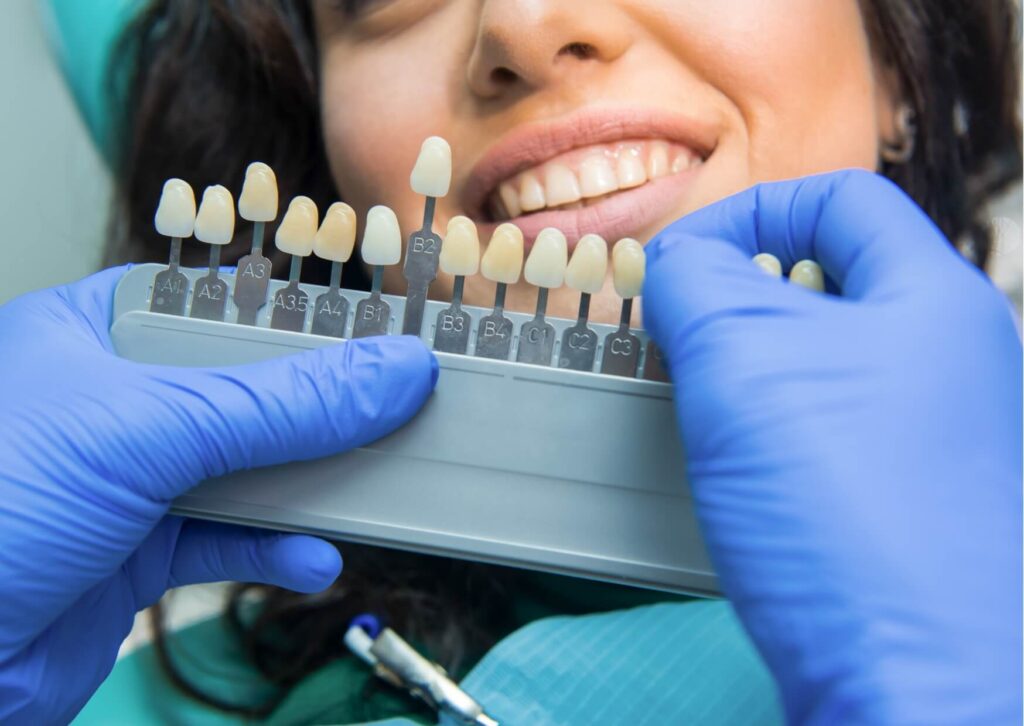
Whitening strips are popular because they are accessible, relatively affordable, and easy to find. For mild surface staining, they can be a reasonable starting point.
Professional teeth whitening is usually more predictable because a dentist can assess the cause of discoloration, protect the gums, and choose an approach that better matches the teeth. Custom trays or in-office treatments may also fit more evenly than one-size-fits-most strips.
That does not mean every patient needs the strongest option. It means the best approach depends on the stain pattern, dental history, and whether the goal is mild brightening or a more controlled cosmetic change.
| Option | Best For | Main Advantages | Main Limits |
| Whitening strips | Mild to moderate surface staining | Convenient, lower cost, easy access | Less precise fit, more variable results, may irritate gums |
| Professional take-home whitening | Patients wanting more tailored treatment | Better fit, supervised plan, often more even whitening | Higher cost, requires dental evaluation |
| In-office whitening | Faster cosmetic change in selected cases | Close supervision, controlled application | Higher cost, not ideal for every type of discoloration |
A dentist can also tell when whitening is the wrong tool altogether. Sometimes cleaning, replacing mismatched restorations, microabrasion, bonding, or porcelain veneers makes more sense than repeated bleaching attempts.
For patients seeking a coordinated plan that addresses color, shape, and alignment at once, a smile makeover can combine treatments for a more uniform result.
Whitening may sound like a small cosmetic choice, but it can carry more emotion than patients expect. School photos, weddings, job interviews, and social media can turn a mild concern into a daily worry.
Families often notice that stress before the patient says much about it. A parent may see a teenager comparing smiles in every photo, or a partner may hear repeated concern that teeth look unhealthy when the real issue is ordinary staining.
That is where perspective matters. Not every yellow tone means disease, and not every brighter result means a healthier mouth.
For younger patients especially, caution is wise. If teeth are still developing, if there is active decay, or if the concern is driven by sudden appearance pressure rather than a steady cosmetic goal, a dental evaluation is the better first step.
A good clinician does more than explain products. They help separate normal variation from true discoloration and cosmetic preference from untreated disease.
Yes, for many adults with healthy teeth and common surface staining, whitening strips can produce a visible improvement. They are most useful when expectations are realistic and the discoloration is the kind peroxide can actually lighten.
They are less effective when the color change is internal, uneven, restoration-related, or linked to a dental problem. They can also be a poor choice for patients with significant sensitivity, gum irritation, or a single tooth that looks darker than the rest.
The smartest approach is simple. If the teeth are healthy and the staining is mild, strips may be a reasonable option.
If your teeth feel painful, patchy, sudden, or hard to explain, start with a dentist before trying to whiten. That step may save time, discomfort, and disappointment, and it often leads to a better result because it is based on the real cause of the color change.
If you'd like professional teeth whitening at Tabor Dental Associates in Hendersonville, TN, serving patients from Nashville and Goodlettsville, call (615) 822-3200 to schedule.
Often, yes. Yellow teeth caused by surface staining or normal age-related darkening may respond fairly well, but deeper discoloration may improve less.
Results vary based on diet, smoking, oral hygiene, and the original cause of staining. In general, the effect fades over time, especially if stain-causing habits continue.
When used as directed, they do not usually cause permanent enamel damage in healthy teeth. Still, they can trigger temporary sensitivity or gum irritation, and they may worsen discomfort in teeth that already have cracks, decay, or exposed roots.
Uneven whitening can happen when strips do not contact every surface evenly or when different teeth have different causes of discoloration. Restorations such as fillings or crowns can also make the smile look patchy because they do not whiten like natural teeth.
If there is no pain, no obvious dental disease, and the staining seems mild and generalized, some patients start with over-the-counter whitening. If symptoms are severe, one tooth is darker, the gums are inflamed, or the cause is unclear, a dental exam should come first.